ACT
ACT New Zealand is a classical liberal political party in New Zealand that champions individual freedom, personal responsibility, free-market principles, and equal treatment under the law. ACT stands for every New Zealander having the freedom to succeed on their own terms and equal rights before the law.

Project OverviewThis project involved a comprehensive redesign of ACT New Zealand’s public website to improve clarity, accessibility, and engagement. As the lead designer, I focused on transforming a content-heavy political platform into a structured, user-centred experience that clearly communicates ACT’s values, policies, and pathways for involvement.
The redesign needed to support multiple audiences, including voters, media, members, volunteers, and donors, while maintaining trust, neutrality, and accessibility at scale.
Challenge
ACT’s existing website contained a large volume of important information, but the experience made it difficult for users to quickly find what they were looking for or understand how to engage. Key challenges included:
Dense policy content with limited hierarchy
Multiple audience types with different goals sharing the same pathways
Inconsistent navigation and unclear information structure
Limited guidance from discovery through to action, such as joining, donating, or attending events
The challenge was to bring clarity and order to a complex political ecosystem without oversimplifying or diluting the party’s messaging.
Website: https://www.act.org.nz/
I led the redesign of the ACT New Zealand website to deliver a modern, accessible, and user-centred digital experience that better represented the party’s identity and purpose. This involved reorganising content to prioritise key policy areas, strengthening visual communication, and designing intuitive navigation that made core information easy to find for both new and returning visitors. The updated design supports clarity of message while reinforcing ACT’s commitment to transparency and engagement.
Narrative Flow, Site Map and Information Architecture
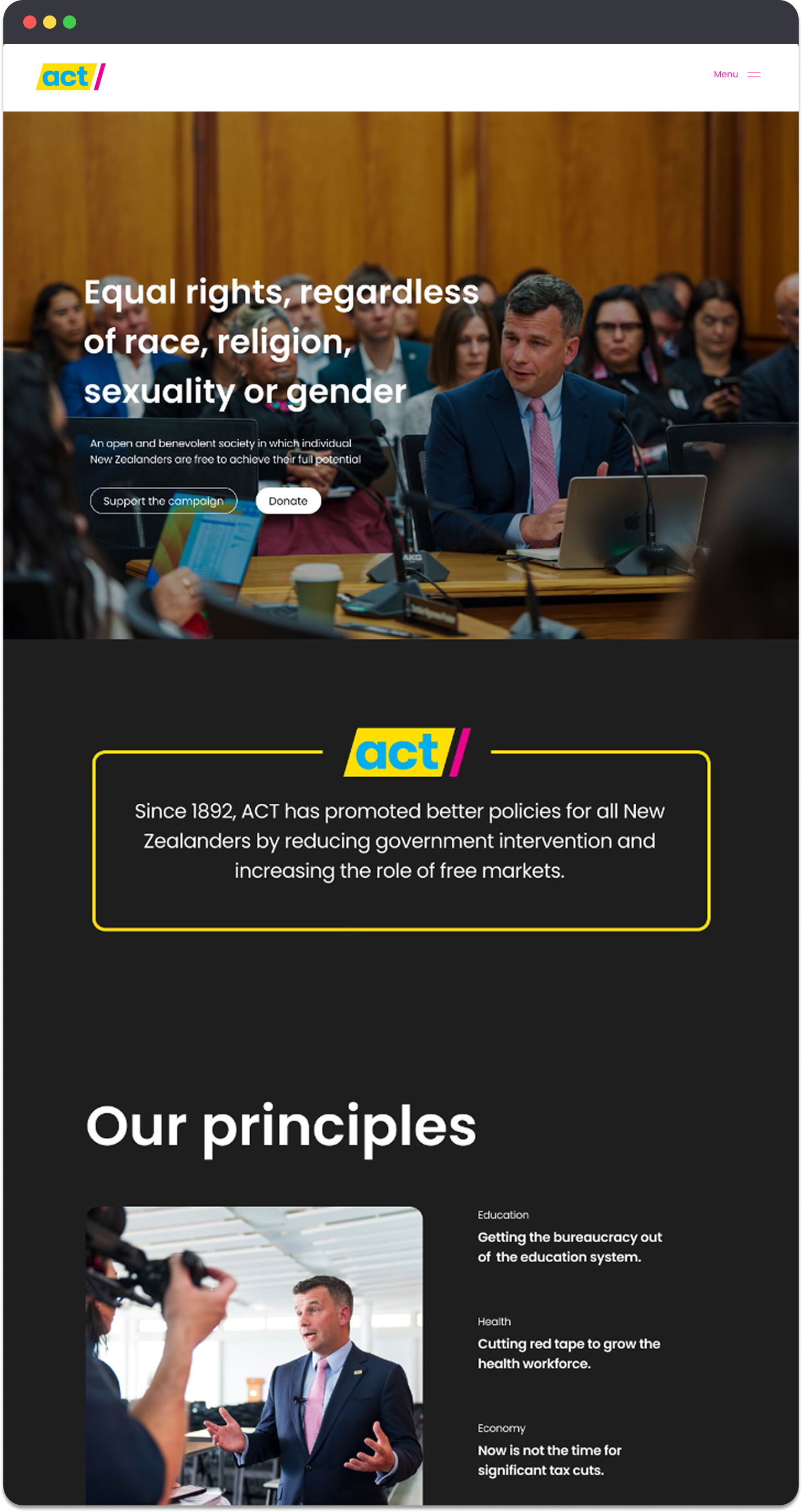
The redesigned site follows a logical narrative progression that helps build trust and clarity:
Introduction to ACT’s core values and mission
Overview of key policy areas and solutions
Profiles of party leaders and representatives
Clear actions for engagement and support
This structure guides users step by step, making it easier to understand who ACT is, what it stands for, and how people can engage with the party.
The navigation was structured around primary user intents:
Home
Introduces ACT’s values, principles, and latest updates, with clear entry points into policies, people, and engagement.Policies
Policies are organised into a high-level overview, category pages, and individual policy detail pages. This structure allows users to explore broadly or dive deep without feeling overwhelmed.People
A dedicated section showcasing party members and representatives, with individual profile pages to support transparency and credibility.Join Us
Clear membership pathways for both members and volunteers, supported by newsletter sign-ups and member login access.Donate
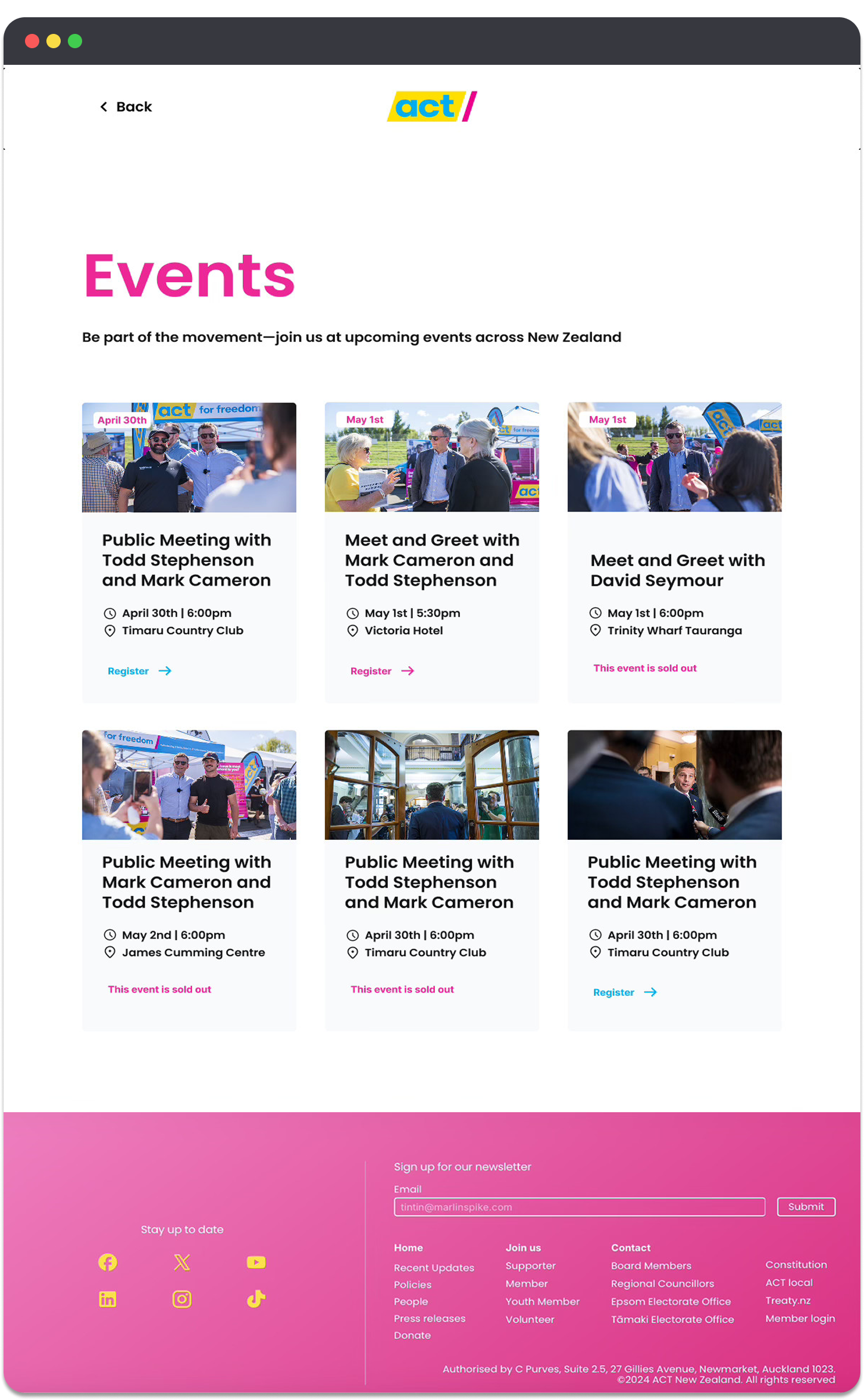
A focused donation flow designed to minimise friction and support quick, confident contributions.Events
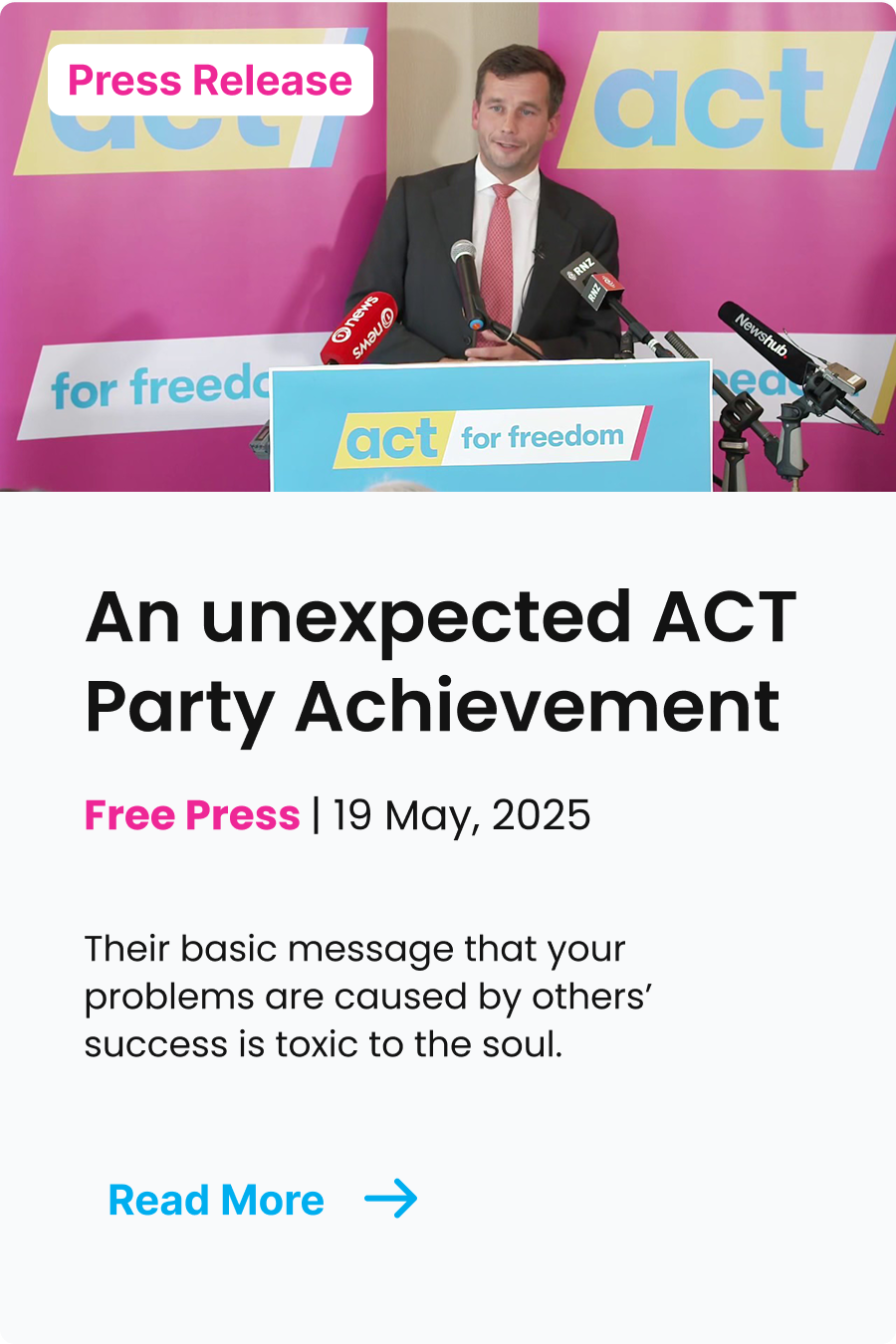
An events overview with individual event pages to promote participation and community involvement.Press Releases
A structured media section allowing journalists and the public to easily access official announcements and updates.Contact
Clear contact pathways segmented by intent, including board members, regional councillors, and regional contact points.
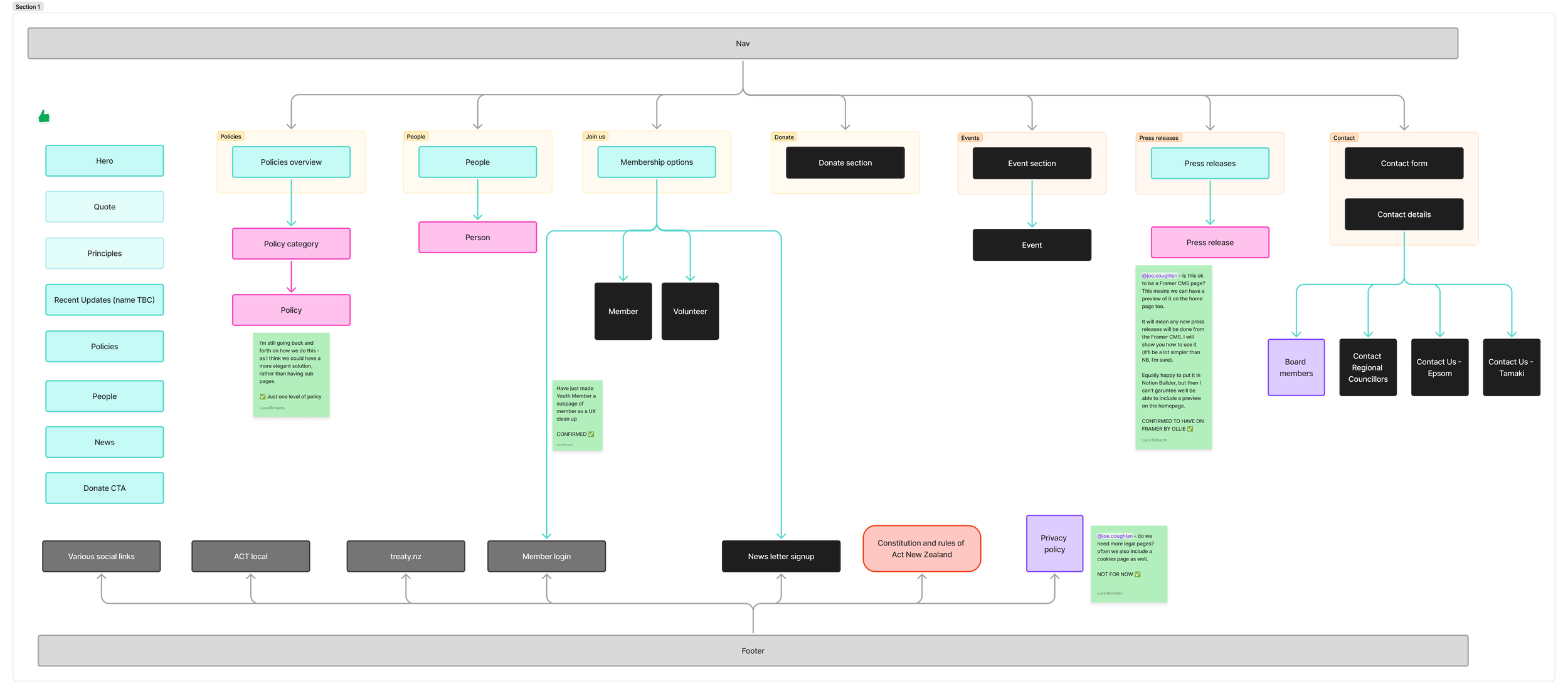
A core part of this project was redefining ACT’s information architecture. I developed a comprehensive site map to organise content into logical, user-centred sections and reduce cognitive load.

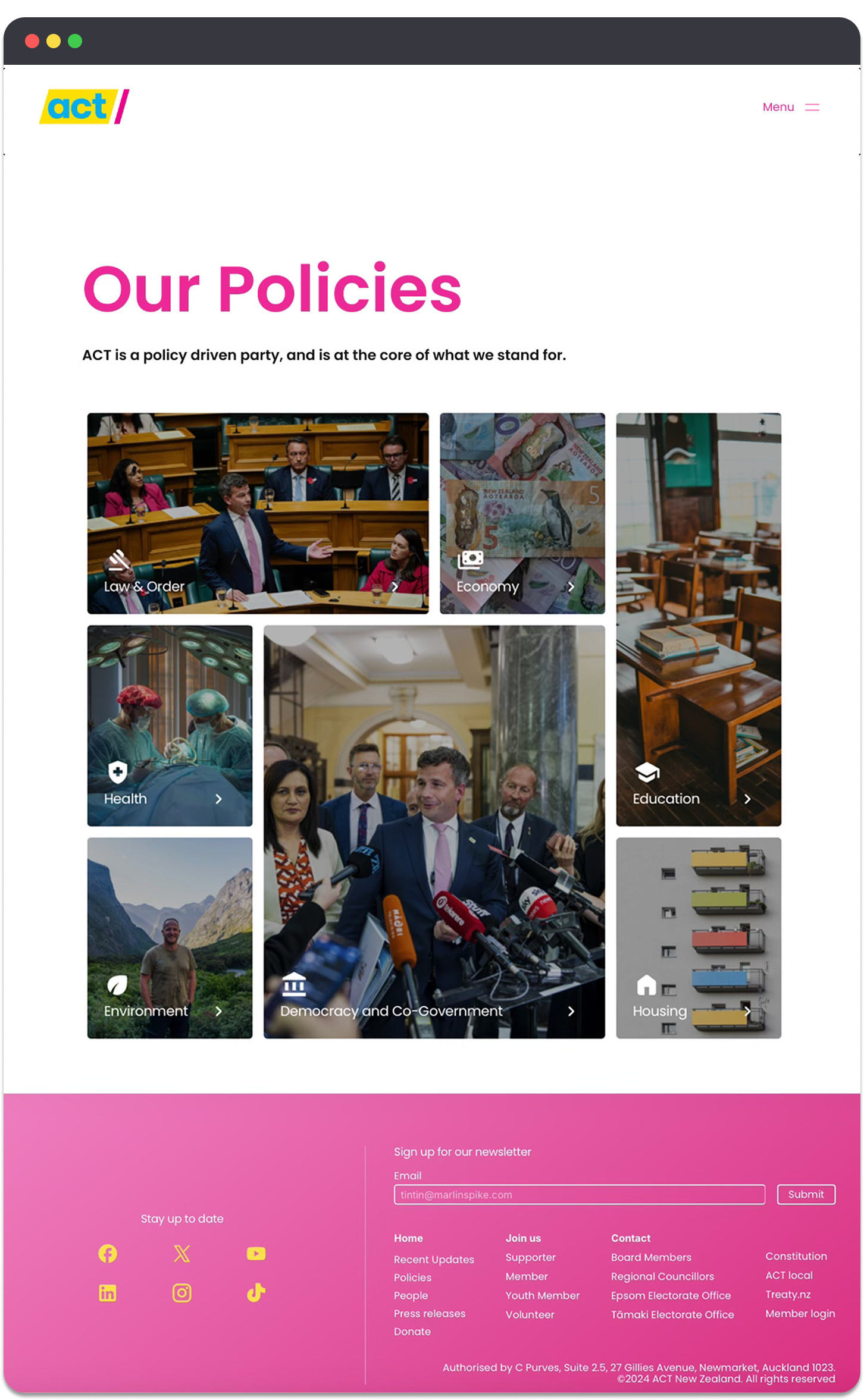
The redesign focused on clarity, accessibility, and engagement across a complex content landscape. Policies and content were reorganised into clear, scannable sections, supported by strong visual hierarchy, consistent templates, and responsive layouts.
Audience-specific pathways and clear calls to action guide users from discovery to participation, including joining, volunteering, donating, and accessing updates. Key user journeys, such as voters exploring policy, supporters getting involved, journalists accessing media, and donors contributing, directly informed navigation structure and content placement.
“A scalable structure built for clarity today and campaigns tomorrow.”
Key Design Decisions
Clear hierarchy for complex content to support scanning and comprehension
Consistent page templates for policies, people, events, and press releases
Audience-specific pathways to reduce friction between discovery and action
Accessibility-first layouts with readable typography, spacing, and contrast
Scalable structure to support future campaigns, announcements, and policy updates
Design Approach and User Journeys
Outcome
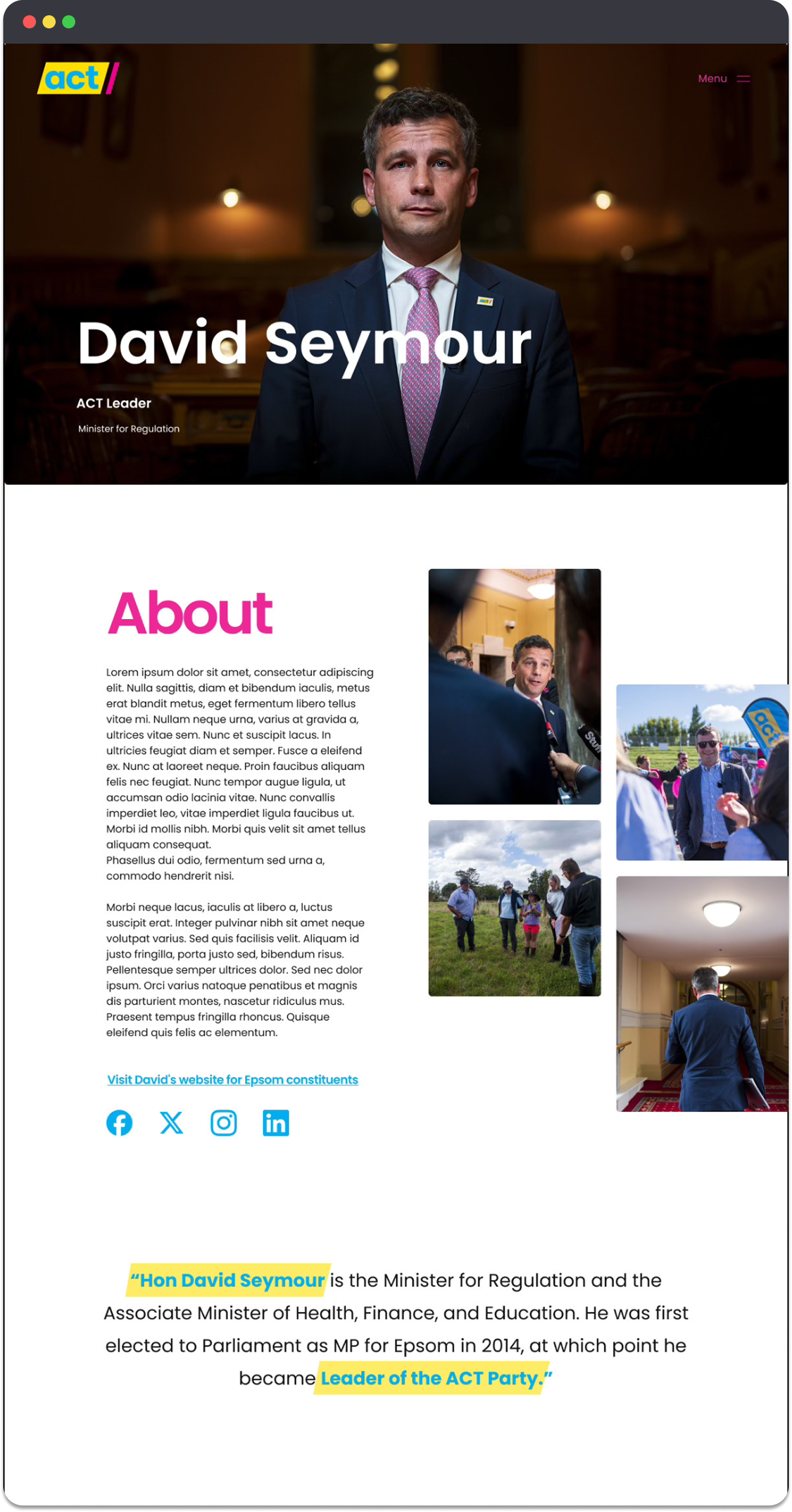
The redesigned ACT website delivers a clearer, more accessible digital platform that supports political engagement at scale. The improved information architecture makes it easier for users to understand ACT’s values, explore policy positions, and take action.
Key outcomes included:
Improved clarity and navigation across policy and content-heavy sections
Stronger engagement pathways for membership, volunteering, and donations
A scalable foundation that supports future campaigns and growth
A more confident, credible digital presence aligned with ACT’s public role
Reflection
This project required balancing political neutrality, transparency, and engagement within a highly complex content environment. By grounding decisions in user intent and strong information architecture, the final result supports ACT New Zealand’s mission while delivering a clear, accessible experience for a diverse national audience.